Followers

Tuesday, April 29, 2014

How Emily Ruppel Came into the Science-Faith Arena

Emily Ruppel

Emily Ruppel, Associate Director of Communications for the American Scientific Affiliation, tells about her unusual route into the science-faith arena, which began with a nun.


A few years ago while studying in the science writing master’s program at MIT, I heard about something rather brilliant from a friend at Harvard University. Brilliant things happen at Harvard all the time, of course, but this was ‘brilliant’ in a different way—unexpected, illuminating, and challenging, for the people it happened to. It opened up a course of conversation previously unavailable to its participants. It was controversial, too, in a quiet way.

What happened is this: a graduate student studying astronomy sent an email to her department announcing her imminent departure from the program. She had no qualms with administration nor academic difficulties to my knowledge. It’s just that, in her life, at that time, it had become impossible to ignore the calling to become a nun, rather than an astronomer. To study service and the word rather than cosmic forces and the vast heavens. Her love of Jesus, she wrote in her letter, was very important to her, and this path she was about to embark on, it seemed, would be the only truly fulfilling work she could spend her life doing.

I don’t know much else about the letter or its writer—whether the decision was sudden and easy or difficult and drawn-out, or maybe a mixture of all these things. I do know that surprise and chagrin rumbled throughout the astronomy department, where folks questioned what seemed an illogical and perhaps ill-fated decision.

Read it all here.


Wednesday, April 9, 2014

King's Ridge Christian School Hosts STEM Education Event


Alice C. Linsley

On January 25, 2014, the Atlanta chapter of Young Women In Bio (YWIB) conducted a STEM outreach event for middle and high school girls at King’s Ridge Christian School in Alpharetta, Georgia. The event was aimed at motivating young women to aspire to science careers, especially in life sciences. The event was led by women scientists with specialties in Molecular and Developmental Biotechnology, Microbiology, Genetics and Neuroscience. The workshop involved hands-on classroom activities where students learned about the human skeletal system, different kinds of viruses, the human brain and the neurological processes behind human vision.

Hunter Chadwick
Quizzes were given along with prizes for the winners and the day concluded with a panel discussion featuring women from diverse STEM backgrounds and at different stages of their careers.

The Atlanta chapter of WIB was founded in 2012, to cater to the women in the life sciences sector. WIB-Atlanta provides women a space to interact and exchange information and ideas, through a wide range of social gatherings and educational workshops.

Hunter Chadwick, Principal of the High School, said, “The opportunity to host such an event was extremely rewarding and special for us. We hope we can offer similar events in the future and appreciate the time and education of those involved.”

The successful event at King’s Christian School can serve at a model for CWIS and ASA in considering similar events. We could begin by contacting local Christian schools about hosting a Science Day.

Friday, March 14, 2014

Scientist and a Christian: One Woman's Perspective


Lynn Billman

What If a Woman Wants to Believe in Both Jesus and Science?

This may seem a strange question to many of you, but it is not strange to a young Christian, “on fire for Christ” as we say, who is also on fire to know the what, how, and when about the natural world.   As Tim Stafford pointed out recently, such a young person from a conservative church background is at high risk to lose her faith in the pursuit of scientific knowledge. In fact, some bloggers or commentators today simply cannot understand how anyone with a rationale mind (i.e., a scientist) could accept the teachings and divinity of Christ or accept the Bible as a sacred and vital book.  

I was once in that quandary – well, sort of, because my path was the other way around.  Science came first.  I loved science in high school, and graduated with highest honors in chemistry at UC Berkeley.   As a chemist, I loved working in the analytical lab of a major oil company, identifying unknown substances, trying to figure out why this engine part failed, and so on.  It was mystery, logical thinking, and discovery. 

But by mid-life, my personal life was in deep difficulty – unhappy marriage, three little kids, no help, nowhere to turn.  Churches were familiar from my young childhood as places of solace, although I never did get the Jesus “thing.”  When I finally tried church again in mid-life, people were indeed friendly, and someone watched the kids for an hour for free. Then, at a women’s retreat I was desperate enough to try, total strangers loved so unconditionally, in all my pain.  I decided then that I wanted to see what this Jesus thing was really about – this Jesus that the women claimed was the source of their love for me.

That was 24 years ago.  I began to read anything I could find on Christ, the Bible, and living as a Christian.  I dug into apologetics and the “5,000 answers to tough passages in Scripture” with the same fervor I dug into analytical problems in the lab.  I asked the tough questions – I still ask the tough questions --  and, yes, fundamental Christianity caused some cognitive dissonance.  I remember asking myself, do I have to give up believing that life evolved in order to have the love of Christ that I so craved?   

Through my journeying, I have found that I can indeed believe in the scientific process with its flaws, in the Christian church (writ large) with its flaws, and most wholeheartedly, in Jesus Christ as my Lord and Savior.  But I no longer hold “religious fundamentalist” views, in the general sense of the term.  My constant seeking of Jesus has taken me to experience many different Christian traditions, and some non-Christian, and my spiritual views have broadened.  But I see myself as a good example of how it is very possible to be a Christian and a scientist, without schizophrenia or other dissociative disorders!

There are others of us, too.  More than ten years ago, I found the American Scientific Affiliation.  It is a great place for people like me. ASA is a fellowship of Christians involved in all areas of science, engineering, and related.  We don’t take positions on issues, but try to provide a place for respectful discussion and scholarly investigation of science and Christian faith.  ASA members include Nobel Laureates and common lab rats, students and theologians – but all Christians, and all doing or involved with respected science.  We even have a new group within ASA called Christian Women in Science (CWIS link), because Christian women have even more issues pursuing a career in science, engineering, and related than do Christian men. ASA has a scholarly journal; as an example, here is an issue devoted to papers on evolution.  We also have an e-zine on God and Nature, with many types of interesting essays and insights for the less scholarly reader.  Lastly, anyone is welcome to join us at our annual conference, held every summer over a weekend, with inspiring speakers from a variety of science disciplines (coming up:  July 25-28, 2014, Hamilton, Ontario  link). 

Also, another great organization for those who pursue serious science and serious Christian faith is BioLogos.  BioLogos differs from ASA in specifically focusing on the issues about evolution, and striving towards a mission “to help the church develop a worldview that embraces both of these complex but complementary ways of understanding the world and our place in it.” 

So if you want to believe in both science and Jesus, you’re not alone.  Come, join us for fellowship and shop talk!


Saturday, March 1, 2014

In Science, Mentors Matter


Alice C. Linsley

I have been pioneering the new field of Biblical Anthropology for over 30 years. This discipline applies the tools and methods of anthropology to Biblical texts with wonderful results that have led to significant discoveries about Abraham's ancestors, the origin of difficult Hebrew words, and the relationship of castes and clans named in the Bible.

Because this is a new field, there are no degree programs at any universities in the world, so interested young people contact me with questions. They express their interest in this research and some have asked me to mentor them. At this point I am working with 3 people and I am delighted that they are helping to lay the foundation for this new field of scientific investigation.

Mentors matter so much in science. Those who are just getting started need experienced people to help them negotiate the challenges of entering a career. Sharing experiences and insights can benefit both parties. The mentor should remain available for as long as that relationship proves helpful, but as with a parent-child relationship, a time comes when the students must launch out on their own. That's when they will develop greater confidence and are more likely to make their own discoveries.

Here is an article in which four female mentors share their wisdom with a graduate student who wants to make the most of the mentoring relationship.


Thursday, February 27, 2014

Christian Women in STEM are a Vulnerable Minority


Lynn Billman is the President of Christian Women in Science. She recently wrote an excellent article that appeared at Huff Post/Religion about Christian women in STEM. Here are the opening paragraphs:

Christian Women in STEM are a Vulnerable Minority

Lynn Billman

As the President of Christian Women in Science (CWIS, part of the American Scientific Affiliation), I hear many stories about the struggles of women of this faith who are interested or work in science, technology, engineering and math. Some stories are encouraging, but others are enough to break my heart.
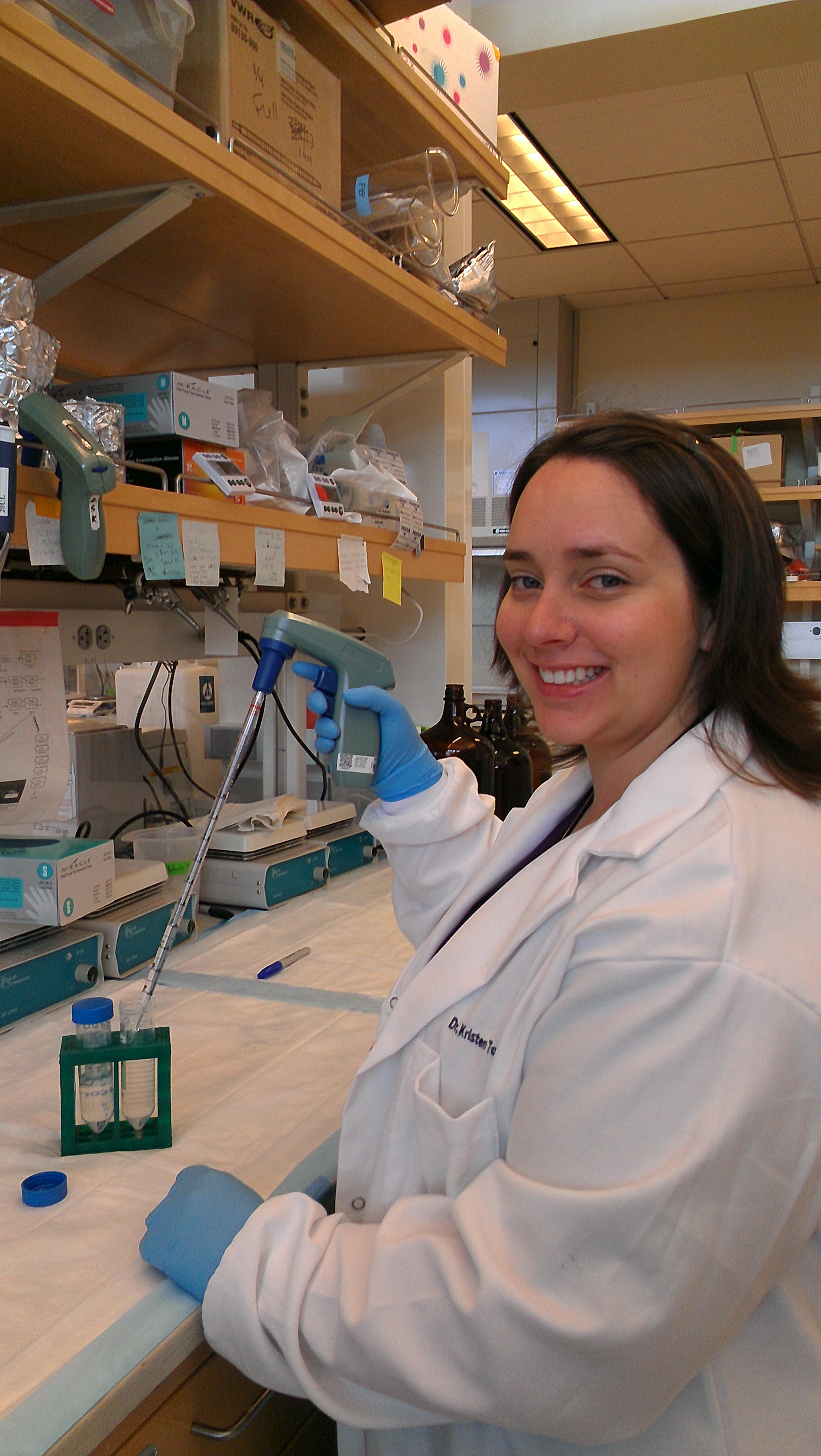
2014-02-25-kristeninlab.jpg
Rochelle was a high school biology student who was excited about the advances in genetics that her teacher shared with her in school. She dreamed of making a difference in the world by doing medical research. However, when her church youth leader told her that there were too many gaps in the fossil record to believe evolution and that only atheists believed in evolution, Rochelle's sense of direction began to waver. If she became a medical researcher, would she have to give up her Christian friends?

Liz had enjoyed her 10 years as a geology professor at a mid-sized state college. She rarely talked about being a Christian, but recently the subject came up when she told her department head about spending her weekend serving supper at the local Christian mission, and telling people about the love of Jesus. A couple months later her application for tenure was turned down. She never got a clear explanation of why she was rejected. As Liz found, being a Christian and a scientist in a secular institution can feel like being a "lesbian still in the closet."

Read the whole article here.


Friday, February 21, 2014

International Congress of Quantum Chemistry President Apologizes


Bias against women in science reared its ugly head last week when the preeminent conference for theoretical chemistry posted a list of two dozen confirmed speakers without including a single woman.

A group of female scientists promptly called for a boycott, but faced backlash from a prominent chemist who dismissed their efforts as “nonsensical” and “trendy whining about supposed ‘gender inequality.’”

More on that in a bit, but first some background. The International Congress of Quantum Chemistry is held by the International Academy of Quantum Molecular Sciences and scheduled for June in Beijing next year. When the conference revealed its initial speaker list (since taken down from the website), every one was male.

“It happened again — another major theoretical chemistry conference features an all-male program,” reads the boycott petition, which was written by theoretical chemists Anna Krylov, Emily A. Carter and Laura Gagliardi and received 835 signatures within a few days.

Read it all here.

An apology came from the President of The International Congress of Quantum Chemistry. Apologies should be follow by action to correct wrongs. Let's hope that happens.

Monday, February 17, 2014

Dorothy Boorse on interrplay of faith and science


Professor Dorothy Boorse discusses her path from pre-med student to wetland ecologist, the dynamic interplay between faith and science, and the freedom afforded by the Christian liberal arts environment within the Gordon community. Her ability to provide this kind of wise insight to students as they grow in faith and academic understanding makes Dr. Boorse a memorable mentor at Gordon College.