Followers

Showing posts with label STEM. Show all posts

Wednesday, November 10, 2021

Top USA Science Debate Team


The top science debate team in the USA hails from the Bronx! Learn about these amazing students here.

What is their secret? Cooperation. They practice together, research together, and help each other polish their public speaking. They are preparing to compete at the national level in 2022.

Approximately three hundred students are members of the Bronx Speech & Debate Team. Speakers and debaters from Bronx Science have won the country's most coveted championships, including all four national championships (TOC, NFL, NDCA, and NCFL) and major invitational titles (Harvard, Yale, Princeton, Emory, Georgetown, the Glenbrooks, Blake, and Meadows, among many others). 

Related reading: Bronx School of Science


Saturday, July 14, 2018

Women Professors Underrepresented in Professional Journals


These days there is an overwhelming consensus in our scientific community that scientific talent is not gendered. Universities, funding agencies, conference organizers and individual laboratory leaders around the world are all working to resolve this problem. It is time for the journals to “lean in.”

Criminal Justice Professor Cara Rabe-Hemp
Illinois State University


“Publish or perish” is tattooed on the mind of every academic. Like it or loathe it, publishing in high-profile journals is the fast track to positions in prestigious universities with illustrious colleagues and lavish resources, celebrated awards and plentiful grant funding. Yet somehow, in the search to understand why women’s scientific careers often fail to thrive, the role of high-impact journals has received little scrutiny.

One reason is that these journals don’t even collect data about the gender or ethnic background of their authors. To examine the representation of women within these journals, with our colleagues Jason Webster and Yuichi Shoda, we delved into MEDLINE, the online repository that contains records of almost every published peer-reviewed neuroscience article. We used the Genderize.io database to predict the gender of first and last authors on over 166,000 articles published between 2005 and 2017 in high-profile journals that include neuroscience, our own scientific discipline. The results were dispiriting.


Female scientists underrepresented

We began by looking at first authors – the place in the author list that traditionally is held by the junior researcher who does the hands-on research. We expected over 40 percent to be women, similar to the percentage of women postdocs in neuroscience in the U.S. and Europe. Instead, fewer than 25 percent first authors in the journals Nature and Science were women.

Our findings were similar for last authors, the place typically held by the laboratory leader. We expected the numbers to match large National Institutes of Health grants, which are a similarly rigorous measure of significance, scientific sophistication and productivity; 30 percent are awarded to women – comparable to the proportion of women tenure-track faculty in neuroscience. The proportion of women last authors was half what we expected – just over 15 percent of last authors in Science and Nature were women.


Wednesday, April 9, 2014

King's Ridge Christian School Hosts STEM Education Event


Alice C. Linsley

On January 25, 2014, the Atlanta chapter of Young Women In Bio (YWIB) conducted a STEM outreach event for middle and high school girls at King’s Ridge Christian School in Alpharetta, Georgia. The event was aimed at motivating young women to aspire to science careers, especially in life sciences. The event was led by women scientists with specialties in Molecular and Developmental Biotechnology, Microbiology, Genetics and Neuroscience. The workshop involved hands-on classroom activities where students learned about the human skeletal system, different kinds of viruses, the human brain and the neurological processes behind human vision.

Hunter Chadwick
Quizzes were given along with prizes for the winners and the day concluded with a panel discussion featuring women from diverse STEM backgrounds and at different stages of their careers.

The Atlanta chapter of WIB was founded in 2012, to cater to the women in the life sciences sector. WIB-Atlanta provides women a space to interact and exchange information and ideas, through a wide range of social gatherings and educational workshops.

Hunter Chadwick, Principal of the High School, said, “The opportunity to host such an event was extremely rewarding and special for us. We hope we can offer similar events in the future and appreciate the time and education of those involved.”

The successful event at King’s Christian School can serve at a model for CWIS and ASA in considering similar events. We could begin by contacting local Christian schools about hosting a Science Day.

Thursday, February 27, 2014

Christian Women in STEM are a Vulnerable Minority


Lynn Billman is the President of Christian Women in Science. She recently wrote an excellent article that appeared at Huff Post/Religion about Christian women in STEM. Here are the opening paragraphs:

Christian Women in STEM are a Vulnerable Minority

Lynn Billman

As the President of Christian Women in Science (CWIS, part of the American Scientific Affiliation), I hear many stories about the struggles of women of this faith who are interested or work in science, technology, engineering and math. Some stories are encouraging, but others are enough to break my heart.
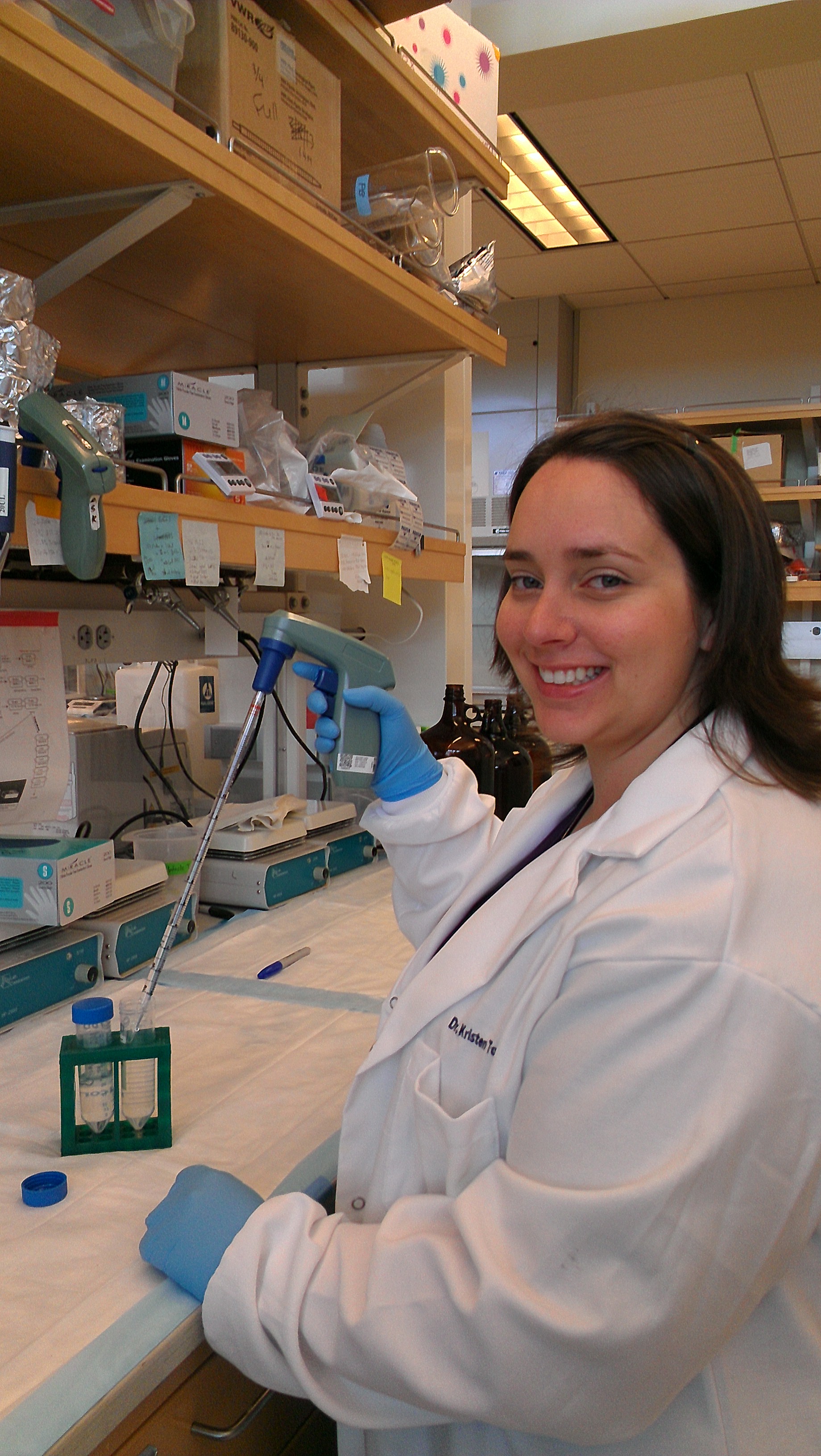
2014-02-25-kristeninlab.jpg
Rochelle was a high school biology student who was excited about the advances in genetics that her teacher shared with her in school. She dreamed of making a difference in the world by doing medical research. However, when her church youth leader told her that there were too many gaps in the fossil record to believe evolution and that only atheists believed in evolution, Rochelle's sense of direction began to waver. If she became a medical researcher, would she have to give up her Christian friends?

Liz had enjoyed her 10 years as a geology professor at a mid-sized state college. She rarely talked about being a Christian, but recently the subject came up when she told her department head about spending her weekend serving supper at the local Christian mission, and telling people about the love of Jesus. A couple months later her application for tenure was turned down. She never got a clear explanation of why she was rejected. As Liz found, being a Christian and a scientist in a secular institution can feel like being a "lesbian still in the closet."

Read the whole article here.


Monday, February 3, 2014

Christians in STEM are not easily labeled


How does a scientist define themselves when their work isn’t their primary identity? This month’s guest post is from Emily Sturgess, a biologist who has found a niche in Oxford.

It took me a while to realise that when you introduce yourself to someone you don’t have to define yourself with a single label. As if the supplies in the stationery cupboard were rationed, I felt for a long time that I was allowed only one label to stick on myself to describe what I do. I am the Development Officer for Christians in Science, so I spend a lot of time with people who describe themselves as ‘scientists’. That makes a lot of sense: they actively participate in scientific research, are employed by science departments in universities, and think ‘scientifically’. It is their profession, and the label is wholly applicable.

All the same, I have always been slightly uneasy about declaring myself a scientist. Aside from the fact that due to an archaic honours system I actually have a BA not a BSc, I do have undergraduate and masters degrees in science subjects (Biological Sciences, and Species Identification, respectively), but I’m still not convinced. Logically, some of this could stem from the fact that I am not actually employed in research. In reality, it’s probably because I don’t want to commit to a single label until people see that ‘scientist’ encompasses so many traits!

I certainly was not the classic ‘born scientist’, but I fell in love with biology as a teenager and pursued it as far as I could. My masters was no strategic career move – I just really wanted to learn to identify plants, animals, and shockingly to all including myself, moss. Honestly, there’s no beauty quite like watching a desiccated moss sample being revived with a few drops of water. The cells dry up when you keep them as herbarium specimens, but that makes them almost impossible to identify because the shapes of the tiny leaves are distorted. If you drop water onto the specimen, however, even if it has been dried and hidden away for years, by what seems some wonderful magic the leaves spring back to life, unfurling under the microscope before your eyes.

So when I speak to other biologists, I also am a biologist. But when I speak to other writers I am a blogger; when I speak to students I am a student leader; when I speak to someone who needs something organising I am an administrator…and through all of those things I am also a Christian, following Jesus whole-heartedly, and hoping that will impact those around me.

So what do you do with an identity that seemingly isn’t tied up in one field, but flits happily between several? Which label are you allowed to wear, when in some ways you’re a scientist but in other ways you’re not? Thankfully for me, I am lucky enough to have found a job that allows me to be a scientist and a Christian, at the same time as everything else.

Working for Christians in Science has been a big release for me, because I love and understand the subject matter and am hungry to know more about almost every aspect of the science-faith dialogue. My role also allows me to be creative and administrative, and gives me time – which I wouldn’t have if I was actively involved in research – to get things done practically for the organisation. Being able to resource so many research scientists, students, teachers, and others, in their walk with God is a real privilege.

It is always humbling to see God taking the eclectic strands of our lives that had previously been wisping all over the place, and weaving them together. It is encouraging that God sees our whole selves – all the facets of our being that he prompts us to invest in – and finds ways to work them together. It always reminds me how much wiser he is than me! He sees our science and our faith and knows how to bring them together. But he sees all the other elements too: our leadership skills, pastoral hearts, discernment, creativity, logical thinking, and everything else that we consider gifts and skills but perhaps haven’t quite known what we are meant to do with them in our professional lives.

As Ruth has blogged before, there is a great call for creativity in science. I believe that there is also a place in science for all our other gifts: being wise when we give advice to others, gracious in our set-backs, and discerning and pastoral in the staff-room. We don’t have to be given a role that specifies those things in the job description to work them into our professional lives.

So for me, defining who I am and what I do was never just a case of how I brought my science and my belief together. More than that, it has been about how I am able to bring all of myself together: in my pursuit of science, in my pursuit of fulfilment, and most importantly in my pursuit of God – covered in as many labels as possible.

Emily Sturgess blogs sporadically at http://love-laugh-photograph.blogspot.co.uk, and is based in Oxford.

Reproduced with permission from Science and Belief.