
Followers

Showing posts with label linguistics. Show all posts

Saturday, December 11, 2021

Dispersion of Words Related to Millet and Rice


Dr. Alice C. Linsley

Linguists and anthropologists have noticed cultural and linguistic affinities between Mongolian, Turkish, Japanese, and Ainu populations. These share a Northeast Asia context that has been traced back to North Eurasian antecedents. The genetic closeness of these populations is evident on this chart.

Luigi Cavalli-Sforza's Genetic Distance Chart


In this study, Martine Robbeets (Max Planck Institute for the Science of Human History in Jena) and her team traced the proto-Transeurasian language back to the Liao river area of north-east China around 9000 years ago.

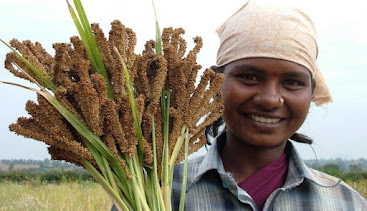
Millet farmers living in that region may have spoken a proto-Transeurasian language that gave rise to Japanese, Turkish and other modern tongues.

Transeurasian languages are spoken across a wide region of Europe and northern Asia. Until now, researchers assumed that they had spread from the mountains of Mongolia 3000 years ago, spoken by horse-riding nomads who kept livestock but didn’t farm crops.

Robbeets and her colleagues used linguistic, archaeological and genetic evidence to conclude instead that it was the onset of millet cultivation by farmers in what is now China that led to the spread of the language family.

In another study, the rice trade appears to have spread common agricultural terms from Africa to Southeast Asia. The term "Sulawesi" might be related to the words "write" and "rice" records. If those who were moving from island to island were merchants, they would have recorded their transactions. Sulawe resembles the Egyptian word for writing ssw; and the Mande sewe; and the Dravidian ha-verasu (referring to written record of rice sales).

Linguistic connections are further evident in the terms for slash and burn cultivation used in Sulawesi and East Africa. The word trematrema is used in Northeast Betsimisaraa to refer to a one-to-three year slashed-and-burnt field. It is related to the Swahili word tema, ‘to cut’, and the redoubled form tematema, ‘to slash, to chop. This technique is used by Sulawesians who practice "dry rice" planting.

Rice grain formed the basis of weight measurement from East Africa to Sulawesi. On Madagascar, the the weight of one grain of rice is called vary and corresponds to the Swahili wari and to the Dravidian verasu. The Hebrew word for rice is orez and Arabic ruz. These share the RZ root with Dravidian. The Dravidian word reflects the written records of commercial weights.

There are two species of cultivated rice in the world: African rice (Oryza glaberrima) and Asian rice (Oryza sativa). African rice was domesticated from the wild ancestor Oryza barthii (Oryza brevilugata) by peoples living in the Benue-Niger floodplain about 3,000 years ago. The two strains of Asian rice are Oryza japonica and Oryza indica, identified with Japan and India.


Tuesday, July 14, 2020

Saving the Largest Online Linguistics Database


In 2015, spare funds started to dry up at the Summer Institute of Linguistics (SIL), a Bible translation group that revolutionized the documentation of endangered languages in the mid–20th century. SIL’s budget had long supported a massive online database considered by many to be the definitive source for information on the world’s languages.

The SIL Ethnologue has served anthropological and linguistic research for decades, but it has become to expense for many researchers.

Simon Greenhill, a linguist at the Max Planck Institute for the Science of Human History, said, “In the last few years, [Ethnologue has] gotten increasingly expensive and locked down."

Since 2013, SIL Chief Innovation Development Officer Stephen Moitozo has been trying to grow Ethnologue and make it self-sustaining. After the first paywall went up, interactive maps and customer service chatbots were added. Ongoing costs include website maintenance, security, and paying researchers to update the databases whenever new information comes in from independent researchers or SIL’s 5000 field linguists.

To pay for its valuable data, SIL is counting on institutions and corporations, as well as individual subscribers. SIL is planning to sell tailored access to corporations, including business intelligence firms, and Fortune 500 companies.


Tuesday, October 24, 2017

Ancient Languages


This fragment of a tablet from Nimrud contains a list of synonyms.
It gives Malku as a synonym for Šarru.
(British Museum ND 5434.)


Linguistics is the study of languages and their structures. Some branches of linguistics include:

Applied linguistics is the systematic study of language structure, how children acquire a language, how subsequent languages are acquired, the role of language in communication, and the status of language as the product of particular cultures and social groups: https://asa-cwis.blogspot.com/2016/09/what-is-phoneme.html

Computational linguistics is a discipline between linguistics and computer science which is concerned with the computational aspects of the human language faculty. It overlaps with the field of artificial intelligence (AI), a branch of computer science.

Dialectology is the study of the way sounds, words and grammatical forms vary within a language.

Psycholinguistics
is the study of the psychological and neurobiological factors that enable humans to acquire, use, and understand language.

Sociolinguistics is the study of how language serves and is shaped by the social nature of human beings in their communities.

Historical-comparative linguistics is a branch of historical linguistics that is concerned with comparing languages in order to establish their historical relatedness. This branch is especially helpful to Bible scholars, biblical archaeologists, and biblical anthropologists who want to understand the relationship of the ancient Afro-Asiatic languages, the oldest known languages. Knowledge of ancient Afro-Asiatic languages helps them to understand ancient texts. Of special importance are Ancient Egyptian, Sumerian, Akkadian, Elamite, Arabic, and Hebrew.

Here are basic lexicons for 2 of those languages:

Ancient Egyptian Lexicon

Akkadian Lexicon


Related reading: Interview with Christopher Ehret; What is a Phoneme?Glossary of Linguistic Terms; Phoneme Study Pinpoints Origin of Modern Languages; Comparative Linguistics


Wednesday, May 3, 2017

Dr. Nola Stephens on Linguistics and Faith


Dr. Nola Stephens
Professor of Linguistics at Covenant College


Savannah Medlin, Grade 8

Dr. Nola Stephens works in the field of Applied Linguistics. Her doctoral dissertation at Stanford University was on how preschool children put their sentences together.

Before coming to Covenant College in Georgia, Dr. Stephens, was a visiting assistant professor at Pennsylvania State University and worked as a research assistant at Indiana University, Stanford, and the University of California. She has been involved in various mentoring programs at Stanford and Penn State, and volunteered as a teacher of English as a second language.

As a child Nola loved language and wanted to learn phonetics. She enjoyed changing her accent when she spoke. Eventually she lost interest in changing her accent, but she never lost the interest in language.

In her professional life, she has been influenced by two of her undergraduate professors: Natsuko Tsujimura and Daniel Dinnsen, and her doctoral adviser, Eve Clark.

Dr. Stephens has received numerous awards and recognitions, including the Rie Weiland Travel Grant, the Paula Menyuk BUCLD Travel Award, and the IASCL Conference Award. Her contribution to applied linguistics is acknowleged by Frank Liedtke, the editor of Beyond Words: Content, Context and Inference.

Dr. Stephens was raised in a Christian home and she doesn’t remember a time when she didn’t know about Jesus and his love for her. She was baptized in the Southern Baptist Church when she was 7. She says, “God has been faithful to preserve my faith and help me grow in my understanding of who He is.”

Here is a podcast in which Dr. Stephens speaks about language and faith. In the beginning was the Word - The Word became flesh and dwelt among us..." She expresses her enthusiasm about her discipline: "a linguist gets to study how words work."

Dr. Stephens is the daughter of Dr. Vickie Shamp Ellis, Professor of Communication Arts and the Division of Communication Arts Chair at Oklahoma Baptist University.


Linguistic Sciences

Linguistics is the scientific study of language and its structure. Some branches of linguistics include:

Applied linguistics is the systematic study of language structure, how children acquire a language, how subsequent languages are acquired, the role of language in communication, and the status of language as the product of particular cultures and social groups.

Computational linguistics is a discipline between linguistics and computer science which is concerned with the computational aspects of the human language faculty. It overlaps with the field of artificial intelligence (AI), a branch of computer science.

Dialectology is the study of the way sounds, words and grammatical forms vary within a language.

Historical-comparative linguistics is a branch of historical linguistics that is concerned with comparing languages in order to establish their historical relatedness.

Psycholinguistics is the study of the psychological and neurobiological factors that enable humans to acquire, use, and understand language.

Sociolinguistics is the study of how language serves and is shaped by the social nature of human beings in their communities.


Monday, March 20, 2017

Nüshu, a Gender-Specific Script


In the the 19th and 20th centuries some women of the southwestern Hunan Province in China wrote using a script that no man could read or write. The writing system allowed these women to keep autobiographies and swap stories and poems between “sworn sisters" but the script is vanishing. 


A sample of Yi Nianhua’s Nüshu writing
CREDIT: Cathy Silber


Cathy Silber, a professor at Skidmore College in New York, worked to decipher and study the written language. She worked with 80-year old Yi Nianhua, one of the last remaining writers of Nüshu. Yi died in 1991 at the age of 85.

“Out of the thousands of scripts that are gender-specific to men, here we have one that we know is gender-specific to women,” says Silber, who has been researching Nüshu since 1985.

The practice of Nüshu was passed down from mother to daughter. Not many Nüshu documents can be found because the script was used mainly in southwestern China and some women had their writing buried with them, leaving few surviving original scripts. 

Nüshu’s elongated lines are in contrast to the wider blocks of Chinese characters. “It’s more efficient than Chinese because it’s phonetic,” says Silber. “A single symbol would represent every syllable with the same sound. So you get more bang for your buck with each character.”

The last woman known to possess knowledge of Nüshu was Yang Huanyi, who died in 2004. Linguists believe that the writing system began in Jiangyong County, where Yang was born. She learned to read and write the language as a little girl. Before her marriage, she exchanged letters in Nüshu with the eldest of the seven "sworn sisters"of Jiangyong County. Yang spent three years with the seven sisters to learn the language, and after all seven sisters died, she was the world's last expert on the language.

Monday, February 20, 2017

Tracing the Roots of Our Biblical Faith


The phonemes found in modern languages have their point of origin in the same place in Africa that genetics identifies as the birthplace of humans.

All the practices and beliefs of the ancient Hebrews have their origin in Africa. This includes circumcision, the male priesthood, animal sacrifice, divine protection through the blood, the veneration (not worship) of ancestors, and belief in a supreme Creator assisted by lesser divine powers, like angels.

The Biblical worldview and religious practices of the ancient Hebrew (Habiru) reflect those of the common ancestors of the Hebrew, the Khoisan, the San, the Ngunis and the Bantu. All emerge from the same Mt-DNA genetic root, Haplogroup L. 

L is the DNA macro-haplogroup that is at the root of the human phylogenetic tree. It traces humans from the so-called Mitochondrial Eve (not the same as Biblical Eve). Mitochondrial Eve lived in Africa about 200,000 years ago.

Abraham's ancestors listed in Genesis 4, 5, 10 and 11 are in Haplogroup R1b, which emerged out of macro-haplogroup L.

The highest density of R1b in Africa is in
Noah's homeland in the region of Lake Chad.


So how old is the Biblical worldview? It is the oldest worldview. This is supported genetics, linguistics and archaeology.

Here is an important principle in cultural anthropology: The more widespread the culture trait the older it is.

One of the oldest known practices is red ocher burials. Red ochre or hematite was mined in the Lebombo Mountains of southern Africa many thousands of years ago. It represents blood covering or divine protection. (The study of blood is called hematology.)

H.B.S. Cooke’s team discovered the 70,000 year grave of a small boy, buried with a seashell pendant and covered in red ochre in the Lebombo Mountains of southern Africa. This is the location of the oldest known mining operations in which thousands of mining tools have been found in tunnel mines. The custom of red ochre burial in the archaic world was widespread and therefore, it is recognized as an extremely old custom. Consider these archaeological discoveries:

A man buried 45,000 years ago at La Chapelle-aux-Saints in southern France, was packed in red ochre. 

“The Red Lady of Paviland” in Wales was buried in red ochre about 20,000 years ago. Her skeletal remains and burial artifacts are encrusted with the red ore.

P.L. Kirk reports that prehistoric Australian aboriginal burials reveal pink staining of the soil around the skeleton, indicating that red ochre had been sprinkled over the body. The remains of an adult male found at Lake Mungo in southeastern Australia were copiously sprinkled with red ochre. The Aborigines have priest who are called "red ochre men."

The ‘Fox Lady’ of Doini Vestonice, Czechoslovakia (near Russia) who was burial 23,000 years ago, was also covered in red ochre.

A 20,000 year old burial site in Bavaria reveals a thirty-year-old man entirely surrounded by a pile of mammoth tusks and nearly submerged in a mass of red ochre.

In the La Braña-Arintero cave in the Cantabrian Mountains of Spain, 7000 year old skeletons were discovered in 2006. The bodies were covered with red ochre.

Two flexed burials were found in Mehrgarh, Pakistan with a covering of red ochre on the bodies. These date from about 5000 BC.

Native Americans used red ochre for ceremonies and burials.


Wednesday, February 8, 2017

Language Families of the World


Here is a list of the language families identified by linguistic studies. English is in the Indo-European family and is from the Germanic branch.

All of the people groups mentioned in Genesis 4, 5, 10 and 11 are in the Afro-Asiatic language family. This is the oldest known group of related languages.

Territories where some Afro-Asiatic languages are spoken.

Most languages of northern Africa and the Near East are descended from a common ancestor known as proto-Afro-Asiatic. According to linguists this proto-language was spoken no earlier than about 10,000 years ago. That is about 6000 years before the time of Abraham.

Sumerian, Babylonian and Hittite have similar roots and phonemes. This suggests that these languages developed from a proto-Afro-Asiatic. Hittite has been linked to Sanskrit and suggest a connection between the proto-Afro-Asiatic languages and the proto-Indo-European languages.

These languages were spoken across a vast Afro-Asiatic Dominion that extended from Central Africa to the Indus River Valley  and Turkey around 10,000 years ago. Consider the linguistic correspondence between these words:

The Semitic word "wadi" = river corresponds to the Sanskrit "nadi" = river.

The Semitic root “mgn” = to give, is the same as the Sanskrit “mgn” = to give.

The Semitic “svam” or “Sam-yim” = sky or heaven corresponds to the Sanskrit “svah” = sky or heaven. Both are likely dreived from the Proto-Dravidian word "van" = heaven.

The Sanskrit “Sakti” = harvest moon celebration, is the linguistic equivalent of the Falasha word “Sarki” = harvest moon festival.

The Semitic "yasuah" = salvation, corresponds to the Sanskrit words “asvah”, “asuah” or “yasuah” = salvation.

The Semitic root "thr" = to be pure, corresponds to the Hausa/Hahm "toro" = clean, and to the Tamil "tiru" = holy. All are related to the proto-Dravidian "tor" = blood.

Sarki live in Orissa, India and as ‘Haruwa’ in the Tarai region of Nepal. The word "haruwa" is equivalent to the ancient Egyptian word ‘har-wa”, meaning priest. In Nigeria the sarki are called "Kano Kings."

Saturday, October 1, 2016

Desiderius Erasmus Roterodamus


“There are some people who live in a dream world, and there are some who face reality; and then there are those who turn one into the other.”—Erasmus (1466-1536)

Desiderius Erasmus of Rotterdam was one of Europe's most famous and influential scholars. A man of great intellect who rose from meager beginnings to become one of Europe's greatest thinkers, he defined the humanist movement in Northern Europe. His translation to Greek of the New Testament brought on a theological revolution, and Erasmus was the dominant figure of the early humanist movement. Neither a radical nor an apologist, he remains one of early Renaissance controversial figures.

Erasmus rose from obscure beginnings to become one of the leading intellectual figures of the early Northern Renaissance. Most historians believe that he was born Gerard Gerardson in 1466 (with many noting his probable birthdate as October 27) in Rotterdam, Holland. His father, believed to be Roger Gerard, was a priest, and his mother was named Margaret, the daughter of a physician. He was christened with the name "Erasmus,"

Read more here.


Erasmus the Linguist

Erasmus had great facility with languages. He spoke and read Dutch, German, English, classical Greek, and Latin. His writings reveal scholarship, imaginative wit, and wisdom.

He used his linguistic gift to help advance education and Biblical scholarship. He translated the writings of the Greek and Latin Church Fathers which made these writings accessible to educated people. He also wrote books of spiritual counsel in Latin, several of which were translated and reprinted in numerous other languages of Europe.

Erasmus's guides to interpretation that he wrote as prefaces to the 1516 and 1518 editions of the New Testament remain one of his most significant contributions.

The Adages of Erasmus is a compendium of wisdom sayings. Niccolo Sagundino wrote about the Adages:
“I can hardly say what a sweet nectar as honey I sip from your delightful Adages, rich source of nectar as they are. What lovely flowers of every mind I gather thence like a honey-bee….to their perusal I have devoted two hours a day.”

Erasmus and Luther Disagree

In 1524, Erasmus wrote a treatise in which he dealt with the Lutheran notion of the bondage of the will to sin. He systematically set out the weaknesses of Martin Luther’s Augustinian view in his De libero arbitrio diatribe sive collatio (The Freedom of the Will). In response, Luther wrote On the Bondage of the Will which directly attacks Erasmus, going so far as to claim that Erasmus was not a Christian.

Luther’s view was challenged by the Christian Humanist Erasmus and by others who believed that Luther's doctrine of total depravity robs humanity of the dignity that remains even after the Fall. That dignity comes from the image of God (Imago Dei) that cannot be completely erased from human nature.

During the Renaissance, humanism took various expressions. Some humanists, such as Erasmus, were deeply religious. These stressed the dignity of man and both heavenly and earthly rewards. Others were scoffers of religion. This secular humanism was a reaction against Church authority and against the bloodshed that resulted from religious conflict.

To Erasmus, the Bible and the Classics were two sides of the same coin, thus he strove to combine them. This is reflected in Erasmus’ definition of education: "The task of fashioning the young is made up of many parts, the first and consequently the most important part of which consists of implanting the seeds of piety in the tender heart; the second in instilling a love for, and thorough knowledge of, the liberal arts; the third in giving instructions in the duties of life; the fourth in training in good manners right from the very earliest years.”

To Erasmus, “a man without education has no humanity at all; that man’s life is a fleeting thing; that youth is an easy prey to sin; that adulthood is afflicted with numerous cares; and that old age, which few are permitted to reach, is barren and sterile...” He believed that the seeds for a good life are in us ‘by nature’, and teachers are to cultivate these seeds. He wrote: “The seeds that nature has implanted in us to attain this goal are bursting with life; the only thing that is required, in addition to this natural inclination, is the effort of a dedicated teacher.”

While Luther began his theology with the depravity of man, Erasmus started with the goodness of the teacher and the student, making Christ’s teachings the objective of all learning. To Erasmus, classical antiquity showed the best method for teaching. He wrote, “I would not want you to imbibe pagan morals together with pagan writings. On the other hand, you will find many things there which are conducive to a holy life, and the good precepts of a pagan author should not be rejected...” Luther held that since the Fall of Adam and Eve man’s will is not free to choose or even desire God, and that we lost our humanity. Luther believed that it is only through Christ that people regain their full humanity and he thought that Erasmus made too little of this point: “I am afraid, however, that he [Erasmus] does not advance the cause of Christ and the grace of God sufficiently.... Human things weight more with him than the divine.”

Erasmus's work has stood the test of time, and today he is recognized as a linguistic giant and one of the most erudite scholars of Western civilization.

Related reading:  Erasmus, Dutch Scholar and Humanist

Friday, September 30, 2016

The Linguistic Development of Hebrew


Hebrew developed from the Canaanite language spoken by people of Abraham's time. In Abraham's time rulers and their royal advisors spoke many languages. The ability to speak, read and write more than one language continued to be a requirement for ruler-priests in Jesus' day. Many of these men served in the Sanhedrin, the Beth Din HaGadol (The Great Court).

Priests belonging to prominent families were highly regarded members of the Sanhedrin. A "prominent" family was one whose lineages could be traced back to Horite Hebrew ruler-priests, what Jews call their Horim. (In English Bibles Horim is Horite.) These members of the Sanhedrin served under the presidency of the high priest who bore the title nasi (ruler, king, prince).

The third century Rabbi Johanan enumerates the qualifications of those in the Sanhedrin as follows: they must be tall, of imposing appearance, of advanced age, and scholars. They were required to be adept in the use of foreign languages. When testimony was given to the Sanhedrin in a foreign language, at least two members who spoke that language were required to examine the witness. There was also a third member who understood the language. These three members constituted a minor court of three, who then reported the testimony to the entire Sanhedrin.

Looking at the diagram below, trace Hebrew back to its "West Semitic" origin. In which language family is the Semitic group classified? To look at other languages in this family, go here.


With what other languages does Hebrew share this lineage?

How many solar symbols do you see in the Canaanite alphabet?


Related reading: The Urheimat of the Canaanite Y; Early Written Signs; Ancient Canaanite Inscriptions

Thursday, September 29, 2016

The Generative Divine Word


Abraham's faith was based on the faith of his ancestors. It is a "received" tradition, not an invention. In this faith tradition the spoken word of the King has great power. Indeed the archaic kings were very powerful men. The Creator's Word is the most powerful of all. It has the power to generate life and to establish order where there is chaos.

This tradition is expressed among African peoples even today. A favorite phrase among the Nilotic Luo is Wach en gi teko which means "a word has power."

The bards of the Bambara Komo Society of Uganda recite this praise of the Word:

The word is total:
it cuts, excoriates
forms, modulates
perturbs, maddens
cures or directly kills
amplifies or reduces
According to intention
It excites or calms souls.

The concept of the living, generative word is evident in this song of the BaMbuti Pygmies:

In the beginning was God
Today is God,
Tomorrow will be God.
Who can make an image of God?
He has no body.
He is as a word which comes out from your mouth,
That word! It is no more,
It is past and still it lives!
So is God.


Tuesday, September 27, 2016

What is a Phoneme?


A phoneme is the smallest unit in the sound system of a language that can be identified as distinct from any other unit of sound. A phoneme is a minimal unit that serves to distinguish between meanings of words.

A pair of words like kátur and gátur that differ only in one "phone" is called a minimal pair.

Here are examples of the phonemes /r/ and /l/ occurring in a minimal pair:
rip
lip


In the field of comparative linguistics the comparison of phones is important in efforts to trace connections between languages. Comparative linguistics is the study of similarities and differences between languages, in particular the comparison of related languages with a view to reconstructing forms in their lost parent languages.

Related reading: Glossary of Linguistic Terms; Phoneme Study Pinpoints Origin of Modern Languages; Comparative Linguistics

Wednesday, September 21, 2016

Technology to Preserve Languages on the Verge of Extinction


Credit: Ryan Red Corn (Osage)

There are many endangered languages in our collective linguistic radar. Some of them have been covered here before and some haven’t. In 2007, Joshua Hinson of Chickasaw heritage, identified that his language was one the brink of extinction. Rather than blaming technology as contributing source to language loss, Hinson embraced the opportunity to use technology to help save his language.

When Hinson saw that his ancestral Chickasaw language was disappearing, he decided to help build an online presence and create a smartphone app to make the language accessible.

Hinson used the internet to build an online presence for his tribe. This has been done before, as recently as in 2012 when Google embraced theEndangered Languages Project. Hinson almost a poured a decade into theChickasaw Language Revitalization Program, and by now knows enough Chickasaw to hold conversations as well as to read and write. As I understand it, at 32 years old, he is youngest member of the language to speak fluently, the next youngest member is 62.

Read the full article here.

Related reading: Dr. Nola Stephens on Linguistics and Faith